
Who cares more about unification, the Albanians in Kosovo or in Albania?
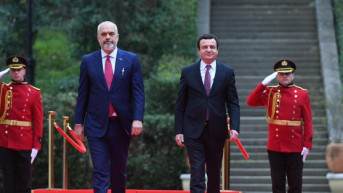
"Despite formal opposition from some Albanian intellectuals in Kosovo, it is clear that Martti Ahtisaari's plan for the unilateral declaration of independence of Kosovo in 2008, supported by key Western countries, which envisaged a separate multi-ethnic concept, is losing ground against the strong aspirations of Albanian political structures in Pristina and Tirana for the affirmation of the Greater Albanian project. However, differences in approach among the Albanians still exist".
Edited by: Milos Garic
The Minister of Infrastructure in the Kosovo Government, Liburn Aliu, openly expressed his opinion a few days ago, which is shared by a large number of Albanians in Kosovo and Albania. He stated that Kosovo's 'independence' was only a temporary project, with a clear allusion to the next step being the unification and creation of a 'greater' Albanian state.
Aliu loudly articulated what he had always believed and what his party leader Albin Kurti was diligently working on. All reactions to the denial of the 'Kosovar identity' that followed in a part of the Albanian public were a weak attempt to conceal something that was an old idea and a completely clear intention of all authorities in Pristina since 1999 - opening the way to annexation by Albania.
"What are the elements today trying to create the Kosovo nation? The Constitution of Kosovo is the constitution of a multi-ethnic country. Who is a Kosovar? Is it a Kosovo Albanian or something else? If we were to create a nation that would strive for the mixing of ethnic groups, I don't know how successful that would be, and it seems it's not. I think an independent state of Kosovo is just a temporary project", Aliu posed some clear questions and provided an answer that directly confirms the long-standing aspiration to create a 'Greater Albania' through the alleged struggle for Kosovo's independence and violent secession from Serbia.
Every day in Kosovo, especially under the current rule of Albin Kurti, it is clear that Martti Ahtisaari's plan, supported by key Western countries, for the unilateral declaration of independence of Kosovo in 2008, which envisaged the creation of a separate multi-ethnic concept, is losing ground against the strong aspirations of Albanian political structures in Pristina and Tirana for the affirmation of the Greater Albanian project.
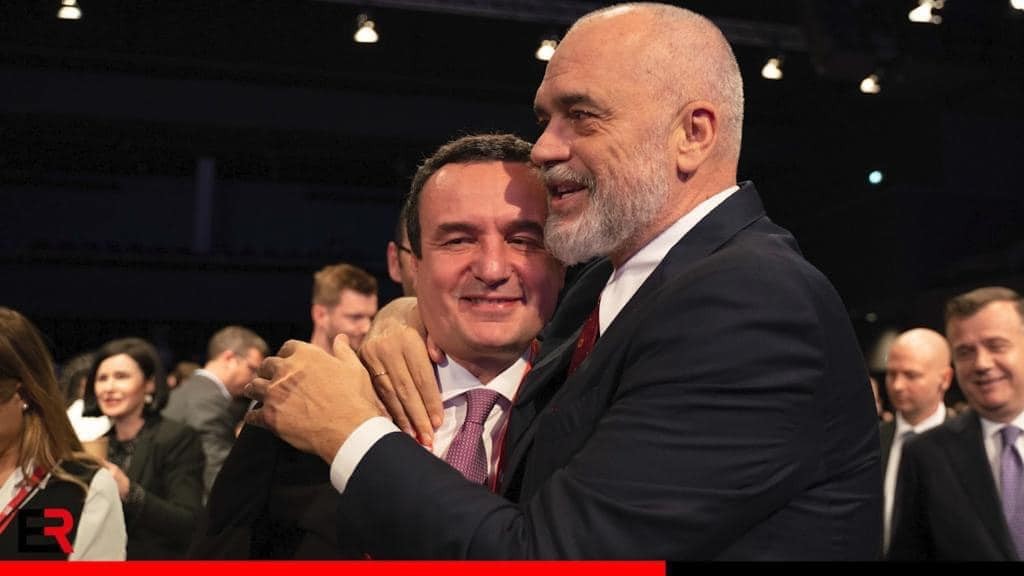
Research by the Gallup Agency a few years ago revealed that almost 80 percent of Kosovo Albanians were immediately in favor of unification with Albania, while high support for this plan had also been recorded in Albania with 68 percent.
How close is the attempt at 'unification', and who wants it more, official Pristina or Tirana?
Albanian Prime Minister Edi Rama stated some time ago that he 'believes that Albania will unite with Kosovo' and that he would vote for it in a referendum, but he mentioned that he did not know when exactly that would happen.
Recently, Timothy Less, a researcher at the University of Cambridge, added to this by discussing possible scenarios for resolving the Kosovo issue. He noted that the idea of the 'national unification of Albanians' was not new, but it was 'widely debated in the Balkans and has strong support among people in Albania and Kosovo who see themselves as a part of a unified Albanian nation'. As an illustration of this, Less mentioned a 2019 survey in which the Albanians from Kosovo and Albania, by a significant majority, expressed support for national unification.
Considering the historical fact that the creation of the identity of the Albanian nation and the formation of the state of Albania at the beginning of the 20th century, were largely influenced by Vienna and Berlin, the question arises as to whether today's influential circles in the West view the continuation of the 'expansion' of Albanian influence in the Balkans with approval, especially knowing that insistence on Kosovo's secession from Serbia leads in that direction.
Albanian leaders thus exert pressure on the Americans
However, there are different opinions among the Albanians in Kosovo, especially in intellectual circles, where it is understood that a potential Albanian 'unification' triggers a series of consequences for the architecture of today's Balkans.
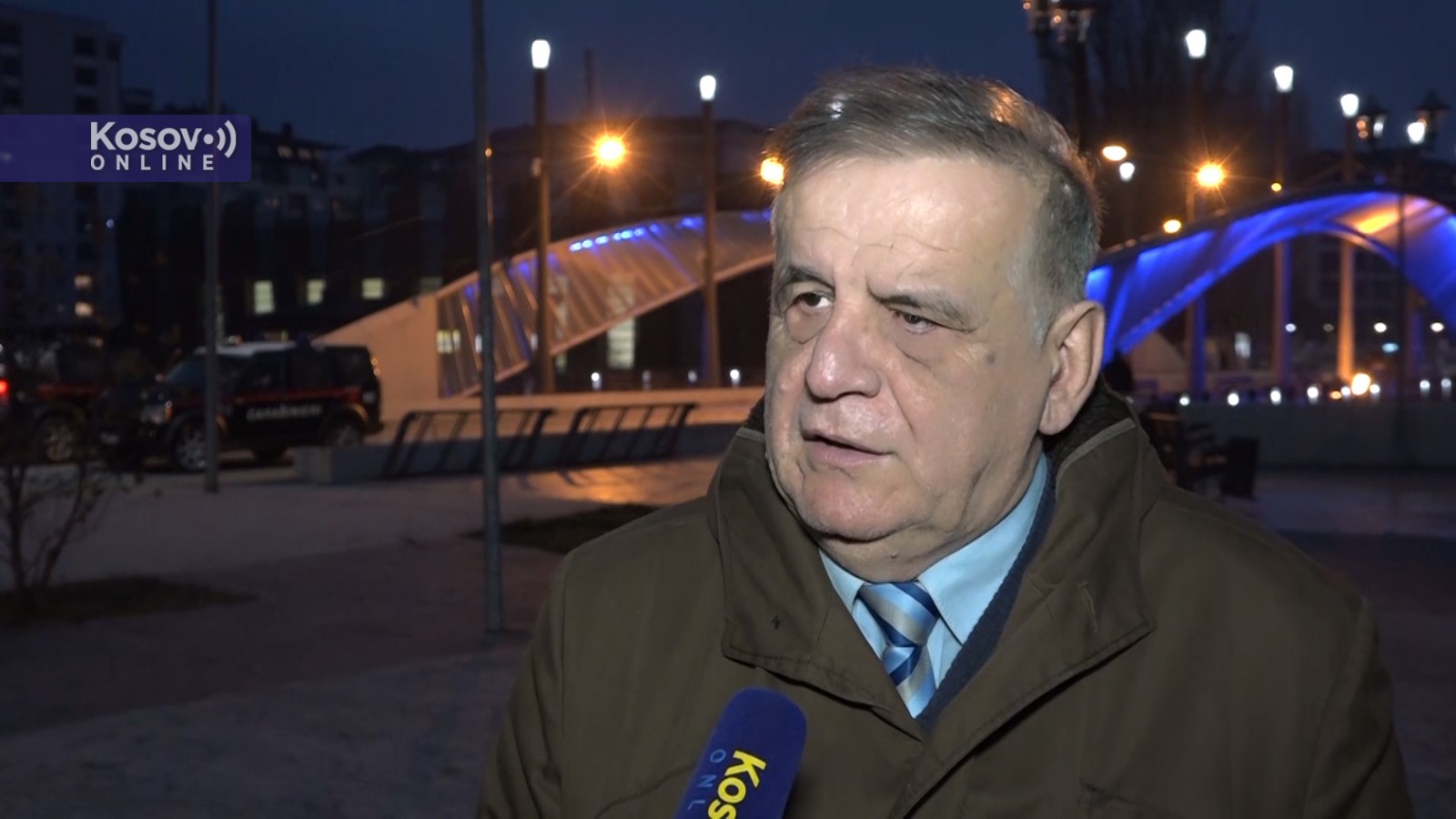
An experienced political analyst from Mitrovica, Nexhmedin Spahiu, even believes that neither the Albanians in Kosovo nor those in Albania need unification.
"Neither one nor the other. Some Albanians in Kosovo believe that they can use this to blackmail the Americans, to appease later them, and place them in power so as not to disrupt the American project of an independent Kosovo. This worked for Hashim Thaci and Albin Kurti. Some are still playing with this card. It's hard to say how long this will continue, but one thing is for sure: there will be no unification of Kosovo and Albania. And if it accidentally happens, a civil war awaits us, as happened when Hitler created Greater Albania in 1943-1944", Spahiu notes.
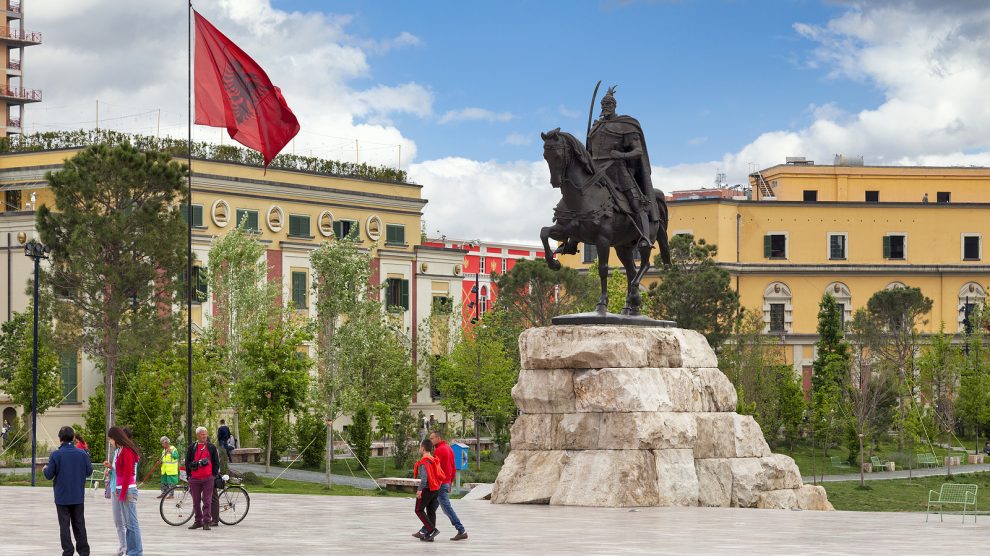
Nevertheless, there is no doubt that, although the idea of the unification of Albanians within a unified and ethnically pure state, the 'Greater Albania', emerged in the late 19th century, the use of this political concept for 'solving the Albanian issue' has become more relevant than ever in recent years.
Political analyst from the Center for Social Stability, Milana Vukovic, states for Kosovo Online that it is undoubtedly seen by the majority of the Albanians as a correction of 'historical injustice' and the fulfillment of the centuries-old dream of coexistence of all Albanians in one state.
"For this reason, playing the card of Greater Albania is an ace that politicians, both in Albania and in Kosovo and Metohija, often use because, as an unwritten rule, flirting with nationalism is always a safe path to raise political ratings and stay in power, especially if that nationalist rhetoric is further seasoned with an anti-Serbian narrative", Vukovic emphasized.
She recalls that Albin Kurti never hid his Greater Albanian ideas, emphasizing the main goal of his policy as 'Albanian unification' and the continuation of the unfinished projects started by the 'League of Prizren'.
"The lack of political vision and capability, along with numerous internal problems affecting the so-called Kosovo state, influenced Kurti to direct his entire political action towards the persecution and violence against the Serbs in Kosovo and Metohija. Instead of tackling the problems affecting his false state, such as poverty, unemployment, corruption, and a significant population outflow, Kurti remains in power solely by rattling weapons and fueling national tensions, which is evidently appealing to a large part of the Albanian population in Kosovo, constituting his voter base. The increased number of ethnically motivated attacks on the Serbs and Serbian property attests that his aspirations are not just mere words on paper. When combined with the Albanian authorities' refusal to establish the Community of Serb-majority Municipalities and fulfill the requirements they committed to in Brussels and other international agreements, it is clear that Kurti is sending a message to the Serbs that they are unwanted and should leave Kosovo and Metohija. The celebration of the KSF on November 27 this year, when Kurti referred to that formation as the successor to the KLA (in a barracks named after the Albanian terrorist Adem Jashari), brought additional unrest among the Serbs. Memories of the horrific crimes committed by that terrorist formation against Kosovo Serbs are still fresh, and numerous Serbian families have not yet received justice and the truth about the fate that befell their loved ones. However, Greater Albanian aspirations are not only a problem for Serbia and its southern province but also Greece, Montenegro, and North Macedonia. Kurti's political goal is not resolving the issue of the so-called Kosovo's independence; his ambitions are much larger. For Kurti, gaining Kosovo's independence is just a step towards unification with Albania and the creation of an Albanian national state, with him at its helm. What is concerning is the complete absence of a reaction from the international community to Kurti's statements and his threats of Greater Albanian nationalism. Although Kurti has long proven to be a factor of instability in the entire region, the Western political stance remains silent on his inflammatory remarks, tacitly giving him support for such behavior", Vukovic explains.
The desire for unification is growing in Kosovo
At the same time, the founder and president of the Association of Professional Journalists of Albania, Aleksander Cipa, tells Kosovo Online that the desire for the national unification of Albanians should not be envisioned simply as a straightforward union between Albania and Kosovo.
"It is more than that, and there is not just one form of administrative unification, although there are differences in perceptions and opinions about this act, both in Kosovo and Albania. In Albania, unification is an interest that encompasses multiple layers of society, sharing an ideal and goal inherited from family tradition. This is an important part of Albanian society, but in Kosovo, the sense and desire for unification are stronger and more openly expressed. Unresolved issues with Serbia exert tremendous pressure in favor of unification, giving us the impression that interest is very high for this process", Cipa says.
According to him, at this moment, the story of the unification of Kosovo and Albania is connected to two important aspects.
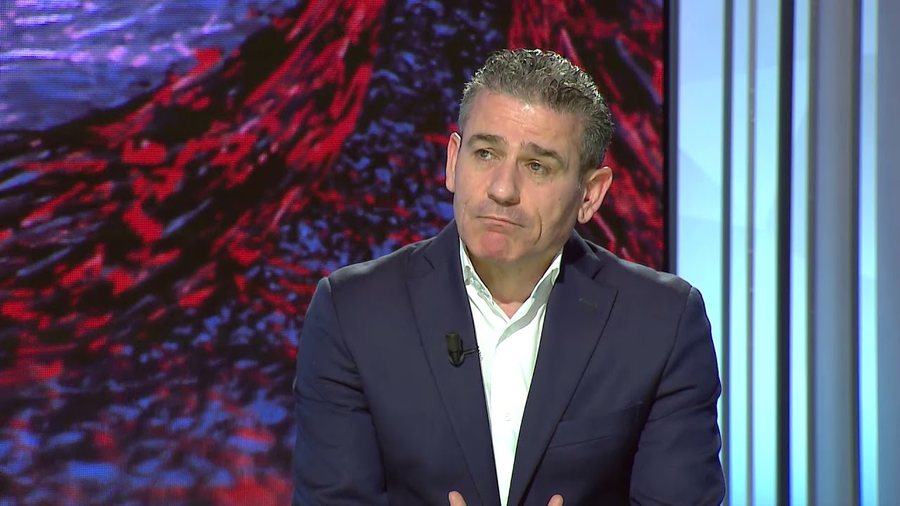
"I mean internal pan-Albanian relations, which refers to our internal differences and the uncertainty about what the internal balance in that country would be in the case of unification. In Kosovo, I think the main skepticism towards the union comes from intellectual circles. Meanwhile, in Albania, there is a pronounced opinion about the necessity of a well-thought-out platform for the union and a strategy for its realization in line with representing all our internal interests and social divisions. I think that the political classes both in Albania and in Kosovo are not sufficiently involved in this process, in this platform; they even hinder and delay the project. I see that the unification of Albania and Kosovo is currently more driven by geopolitical approaches, especially those of Anglo-Saxon countries, under the obvious protagonism of the United States", Aleksander Cipa explains.
Which Albanians would have primacy?
Unlike Albin Kurti, who is openly engaged in the creation of "Greater Albania", Albanian Prime Minister Edi Rama flirts with the idea of "Greater Albania" as needed, Milana Vukovic points out.
"On several occasions, he stated that the project of Greater Albania was nonsense in itself, which many wanted to present as a dangerous monster and a nightmare, and that he advocated for the unification of Albanians within the European Union, not within a national state. However, the fact is that we have heard provocative nationalist statements from him several times, in which he spoke about Albanian unification. Rama uses such statements mostly for political purposes in election campaigns, counting on the potential reservoir of votes he can gain by using national themes", Vukovic emphasized.
She adds that, while Kurti does not hesitate to use force against the Serbs, Edi Rama, at least declaratively, advocates for dialogue and peaceful resolution of all disputed issues, publicly criticizing Albin Kurti several times.
"On the other hand, Kurti does not want to accept Rama's authority, considering himself the one who should be the leader of all Albanians. The warm-cold relations between Rama and Kurti show us that it is difficult to expect a final agreement between them in the near future when it comes to resolving Albanian aspirations. Regardless of their potential agreement on the essential concept of 'Greater Albania', another question naturally arises. Which Albanians would have primacy in that common state—the Albanians from Kosovo or the Albanians from Albania? Or, on the other hand, those Albanians who are more to the liking of Western powers that expand their influence in this part of Europe by allowing the undermining of the territorial integrity and sovereignty, primarily of Serbia but also of other Balkan states, by Albanian separatists", Vukovic concludes with this crucial question.

0 comments